A column from yesteryear
Thursday, March 16, 2023
Feet Touching The Ground
Thursday, March 09, 2023
MARCH SNOW MELT
One year Pa suggested we make a little waterwheel and place it in the melt water river. He made the waterwheel from a cedar wood shingle. He cut two pieces, each about three inches long and a half inch wide. He notched the two pieces and pushed them together making a waterwheel with four little paddles. With two other pieces of shingle wood he made a little frame that held the waterwheel in place while the running melt water turned it.
In early morning, when the temperature had fallen below freezing, the little waterwheel hung motionless in its frame, but usually by mid-day, with climbing temperatures and more snow melting, the waterwheel turned furiously, making a “flip ,flip” sound. The waterwheel turned for more than a week; Pa, my brothers and I would stop, watch and listen to it as we went about doing our various spring chores.
One warm, late afternoon day, we noticed the melt water river had stopped running and the water wheel no longer turned. On that day we knew that spring arrived.
THE OLD TIMER SAYS: Oft times the little things in life can provide the most pleasure.
Thursday, February 23, 2023
A blog I wrote in November, 2015
The Demise of the School of the Arts
An old
friend left us this past week. The more than 50-year old School of the
Arts held each year in Rhinelander, WI and sponsored by the University of
Wisconsin-Madison, is no more. Robert E. Gard was largely responsible for
starting the school. Bob’s philosophy was—the arts are for
everyone. No matter what your income level, where you lived, or how much
formal education you had.
I
attended classes there in the 1960s when I had the opportunity to learn from
Bob Gard. I participated in a fiction writing workshop with August Derleth, and
learned basic skills about writing a novel that have proved invaluable.
And much more.
Then in
1971, Bob Gard asked me to teach at the School of the Arts. I did this
for 32 years. It was there that I met such national writing figures as
Archibald McLeash (three Pulitzer prizes), Dale Wasserman, Henry Mark Petrakis,
Studs Terkel, Robert Bly and Jesse Stuart, all writers of considerable note.
All of whom taught workshops.
But now
the School of the Arts is dead. Many of us are mourning.
Mark
Lefebvre, longtime friend of Robert Gard, said this about the school’s passing:
Learning about the demise of the School of the Arts is
hard. I broke down and cried. I thought of the many summers I spent
with Bob at the School of the Arts. I think of all the people whose lives
were awakened.
I think
of the extraordinary faculty who in that very special place made real magic
happen. Bob taught me so much, most of all, how the unexpected can happen
through simple belief. I am so disappointed these days with the
University of Wisconsin. Belief is no longer part of its
vocabulary. No greater writer than Archibald MacLeish came to
Rhinelander one summer. A sophisticated guy. He could not believe
the world he had entered. Imagine these "students" being
exposed to this man who could not thank Robert E. Gard enough for putting him so
close to the creative process.
Long may the banner of
The School of the Arts wave over the
battlefields of ignorance!
THE OLD TIMER SAYS: The arts make a life
worth living.
Friday, February 10, 2023
The Many Faces Of Snow.
A column from yesteryear.
Snow, for
all of its inconveniences—driving challenges, shoveling, and slippery
walking—also has a lot going for it. The obvious of course is the beauty
of a snowfall and the wonders of the countryside transformed from the drabness
of late fall’s browns and grays to a world of white. Snow also provides an
opportunity to ski and snowshoe and go sledding. And a chance to build a
snowman or a snow fort or maybe even experience a friendly snowball fight.
I did a
little digging, no pun intended, into the characteristics of snow, and came up
with some interesting information, at least interesting to me.
Snow is
not always white. It may also appear blue especially on a cold winter
night when the moon is out.
Most of us have experienced
how sound changes after a fresh snowfall. Sound is absorbed by snow,
muffling it. But when the snow becomes hard and crusty, the opposite
happens. Sound bounces off the snow’s surface and travels farther. Of
course we all know the sound packed snow makes when we walk on it, especially
on cold days when it creaks and crunches, and sounds like it is protesting our
presence.
Snow is also a great insulator. Fresh
snow is made up of from ninety to ninety-five percent air. Many animals
know about snow’s insulating qualities as they burrow into snow to keep
warm. Farmers know this as a good snow cover protects crops such as
alfalfa from “winter kill.” A good snow cover also keeps my septic system
from freezing—not a good thing as it happened a few years ago when we had a
stretch of below zero weather and no snow.
Snow also stores water. Ten-inches of
snow may equal one-inch of water. Or ten inches of snow could contain as
little as one-tenth inch of water. It depends on whether a snowfall is
enhanced by moisture from the Gulf of Mexico, or comes from the dry plains of
Canada.
This is probably more than you wanted to know
about snow, but I find it all interesting as we plow on into the new year with
many more snowfalls to come.
THE OLD
TIMER SAYS: Let it snow, let it snow. Nothing much we can about it anyway.
Friday, January 27, 2023
A Column from Yesteryear Horseshoes and Good Luck
.
Friday, December 30, 2022
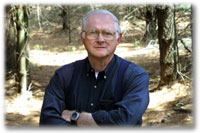
Last Column Photo by Steve Apps
With another year ending, I’m sorry to report that this will be my
last column. It was a difficult decision
to make, as I have been writing columns nearly every year since 1957. In that year I began work as a County
Extension Agent in Green Lake County and wrote columns about Extension
activities for the Berlin Journal. In
1960 I moved to Green Bay and worked there as an Extension Agent, writing
columns for the Green Bay Press Gazette.
Ray Pagel was Farm Director for the paper at the time. He would have made a good English teacher,
for with a red pen he took my columns apart and showed me how to make them
better. He showed me how to say
something with 500 words or less. For his patience and instruction, I am
forever grateful.
In 1962, I moved to Madison to become Publications Editor for the
State 4-H Department, editing all the many 4-H bulletins that went out by the
thousands to 4-H member around the state.
Bulletins that ranged from how to raise a dairy calf, to tips for sewing
and canning. I had no time for column
writing, indeed no time for any of my own writing.
By 1964, I was teaching in the Department of Agricultural and Extension
Education in UW-Madison’s College of Agriculture and married with three little
kids. Learning a new job, and helping
take of my family left little time for column writing. Glen Pound, then Dean of the College of Agriculture
said I must earn an advanced degree before he could increase my salary. So, in 1966, I was a full-time in graduate
school, learning the nuances of academic writing, which was informative, well
researched, and often without much heart.
In 1966, in addition to my academic writing, I began writing a weekly
column titled “Outdoor Notebook” for the Waushara Argus in Wautoma, and
soon also for the New London and Hortonville papers as well as The Central
Wisconsin Resorter. I wrote for
these papers for ten years. A bit later
I wrote weekly columns for the Country Today, and Agriview
newspapers. And for the past few years,
I wrote “Sit Awhile” for the Wisconsin State Farmer. I have also written this column for the past
15 years as both a blog and an entry on my Facebook Page.
I’ve learned much from my many years of column writing. I’ve learned
the power of a story. I have learned
that putting a little heart into a story will often take it from ordinary to something
better. I have worked hard to do that. A little humor helps too. I write with the hope my words will get
people thinking, and perhaps remembering.
Memories are powerful tools to make a life more interesting.
I know I will miss reading all the comments and stories that my
columns have evoked. Thank you everyone for reading my words. I plan to continue to write books and do TV
and radio work, and perhaps write a few articles.
THE OLD TIMER SAYS. Thank you. Without readers, where would writers be?
UPCOMING EVENTS:
Saturday, January 7, 2023, 1:30
p.m. Patterson Memorial Library, Wild
Rose, Wisconsin. Presentation on my
newest book: More than Words. That book
and others will be for sale and signing.
I plan to be there in person.
WHERE
TO BUY MY BOOKS (Including my newest one). As you all know, books make
fine presents. See my website, www.jerryapps.com, for a listing of my books. Buy
my books from your local bookstore,
or buy online from the Wisconsin Historical Society bookstore, https://shop.wisconsinhistory.org/books, bookshop.org, or purchase from the Friends of the Patterson
Memorial Library in Wild Rose—a fundraiser for them. Phone: 920-622-3835 for
prices and ordering, or contact the librarian: barnard@wildroselibrary.
Patterson Memorial Library
500 Division Street
Wild Rose, WI 54984.
www.wildroselibrary.org
If you live in the
western part of the state, stop at Ruth’s home town, Westby, visit Dregne’s. and look at their great selection of my
books. Order a book from them by calling 1-877-634-4414. They will be happy to
help you. If you live in northcentral
Wisconsin, stop at the Janke bookstore in Wausau (phone 715-845-9648). They also have a large selection of my
books.
Friday, December 23, 2022
A Christmas Memory Photo by Jerry Apps
Christmas is a time for remembering. Some of my most vivid memories go back to
1939, when I was five years old and in first grade. I was attending Chain O’ Lake one-room country
school, located about four miles west of Wild Rose. As my fellow students planned for the annual
Christmas program at the school, I was terrified to learn that I would have to
stand on the stage and say my piece. I
was the shiest of shy little kids at the time.
In fact, when someone stopped by our farmstead, I would hide in the
woods back of the house.
Miss
Piechowski, our teacher insisted that I, along with everyone else in the
school, all eight grades, would be involved in the Christmas Program and be on
the stage. I told Miss Piechowski I
couldn’t do it and didn’t want to do it. But she wouldn’t change her mind, she
said I must. And she gave me a copy of the words I must memorize. I practiced the words every night with my mother,
worried that I would make a fool of myself in front of all of my classmates,
and neighbors as everyone attended the annual Christmas Program at the school.
As
the night of the Christmas program loomed every closer, Miss Piechowski noticed
how disturbed I was. She said she’d
share a secret with me to make my task easier.
And she did.
The
night of the Christmas program arrived.
I was dressed in a new pair of bib overalls, and a new work shirt. I even combed my hair. I hated doing that. And now I was worried if my teacher’s secret
would work, and if I would remember all the words I had tried to memorize.
In
1939, the school had no electricity. On
this night, two gas lanterns hung from the ceiling on either end of the school
room—casting shadows in the dimly lit room.
The wood stove in the back of the room was keeping the building
warm. The room was packed. All the seats were taken and people were
standing in the back of the room.
I
was first on the program. Instructed to use my outside voice, and scared to
death. Then I remembered the secret Miss
Piechowski had shared with me as I spoke the words I had worked so hard to
memorize: “I would like to welcome all of you to our annual Christmas Program.”
Miss
Piechowki’s secret, “Don’t look at the people seated in front of you. Look at
the stove pipe in the back of the room.
Everyone will think you are looking right at them, but you won’t see
them.”
I
spoke the words, smiled as Miss Piechowski said I should, and ran off the stage
to loud clapping. I had my first experience with public speaking. I have been giving talks for more than sixty
years, and I continue to look for the stove pipe in the back of the room.
THE OLD TIMER SAYS. A simple lesson can
often be an important one.
UPCOMING
EVENTS:
Saturday,
January 7, 2023, 1:30 p.m. Patterson
Memorial Library, Wild Rose, Wisconsin.
Presentation on my newest book: More than Words. That book and other will be for sale and
signing. I plan to be there in person.
WHERE TO BUY MY BOOKS
(Including One Room Country Schools). See my website, www.jerryapps.com,
for a listing of my books. Buy my books from your local bookstore,
or buy online from the Wisconsin Historical Society bookstore, https://shop.wisconsinhistory.org/books, bookshop.org, or
purchase from the Friends of the Patterson Memorial Library in Wild Rose—a
fundraiser for them. Phone: 920-622-3835 for prices and ordering, or contact
the librarian: barnard@wildroselibrary. www.wildroselibrary.org
If you live in the western part of the state,
stop at Ruth’s home town, Westby, visit Dregne’s. and look at their great selection of my
books. Order a book from them by calling 1-877-634-4414. They will be happy to
help you. If you live in northcentral
Wisconsin, stop at the Janke bookstore in Wausau (phone 715-845-9648). They also have a large selection of my
books.
Friday, December 16, 2022
Remembering Winters Past Jerry Apps Photo.
Several years ago, I wrote a book titled THE QUIET SEASON. It was about winter. Here is a little of what I included in that
book:
Many winters have
come and gone since those days I spent growing up on a farm. Although these stories happened many years
ago, the details are as vivid to me as if I experienced them yesterday.
I remember the
feeling of walking back to the house after the evening milking on a below-zero
night. I would look upward and behold a
sky full of start, for there was no light pollution, nothing to block out the
tiny slivers of light punching holes in the black night.
I remember trees in
winter, the oaks and maples, aspens and birch, stark, thick gray trunks and
bare branches like hundreds of skinny fingers reaching skyward, grasping for
the unknown, embracing the unknown, embracing winter and allow it to paint ribbons
of snow on their branches. Everygreens
became pieces of art: the spruces tall and pyramidal, covered with snow from
top to bottom; the red and white pines looking a bit tortured as their limbs sagged under the weight of the winter
white.
I have always been
intrigued by snowflakes, especially the large, cotton-like ones. I like to watch snowflakes falling en masse,
and I marvel at how quickly they can turn a drab and brown landscape into a
world of white. Most impressive to me is
the close-up of a single snowflake: a frilly, fragile piece of frozen water
that nature has arranged into the most intricate of patterns.
Winter brings sounds
heard only during those cold months. A
crow’s call in winter is one of my favorite sounds. Crows are tough birds. Songbirds pack and leave for the South in
winter. So do the wild ducks, Canada
geese, and sandhill cranes. But not the
crows. On a cold day when I’m out
walking, I often hear crows calling, a loneseome, solitary sound. When I hear it I am reassured; winter may be
the harshest season, but the crows remain, withstanding the worst that nature
throws at them.
Perhaps the most striking and impressive sound of winter is the sound of silence. In winter the birdsong and animal chattering and fluttering of leaves has ceased. On a windless day there is often no sound at all. I may not have understood the power of silence in those days, but I do today, when it is more difficult to find than it was when I was a kid.
Of all the seasons,
winter is the most influential on the lives of people who experienced it. It is not just the length of winter that
creates a group of people called “northerners.” It is the less tangible, often mythical
characteristics of winter that forge a true northerner. Winter is much more than cold and snow.
THE OLD TIMER SAYS. Take time to remember how winter
has influenced you.
UPCOMING EVENTS:
Saturday, January 7, 2023, 1:30
p.m. Patterson Memorial Library, Wild
Rose, Wisconsin. Presentation on my
newest book: More than Words. That book
and other will be for sale and signing.
I plan to be there in person.
WHERE
TO BUY MY BOOKS (Including the Quiet Season). As you all know, books
make fine Christmas presents. See my website, www.jerryapps.com, for a listing of my books. Buy
my books from your local bookstore,
or buy online from the Wisconsin Historical Society bookstore, https://shop.wisconsinhistory.org/books, bookshop.org, or purchase from the Friends of the Patterson
Memorial Library in Wild Rose—a fundraiser for them. Phone: 920-622-3835 for
prices and ordering, or contact the librarian: barnard@wildroselibrary.
Patterson Memorial Library
500 Division Street
Wild Rose, WI 54984.
www.wildroselibrary.org
If you live in the
western part of the state, stop at Ruth’s home town, Westby, visit
Dregne’s. and look at their great
selection of my books. Order a book from them by calling 1-877-634-4414. They
will be happy to help you. If you live
in northcentral Wisconsin, stop at the Janke bookstore in Wausau (phone
715-845-9648). They also have a large
selection of my books.
Friday, December 09, 2022
Finding the Perfect Christmas Tree Jerry Apps Photo
We started the tradition in 1967, the year after we purchased our Roshara
Farm. We have searched for the perfect Christmas
tree every year in late November. That first
year, our kids were five, four, and three.
Finding the perfect tree was not a
small task. We began planting pine trees
at Roshara in 1966, mostly red pines.
Some years we planted several thousand trees. It takes about eight-to-ten-years for a pine
tree to reach Christmas tree height. So, during those early years we searched
among the trees that were self-seeded—meaning nobody planted them. During the 1930s, the drought years in much
of the country, the Coombes family who owned our farm at that time, planted two
long rows of white pine trees to prevent wind erosion. By the 1960s, when we bought the farm, these
white pines stood tall and thick, and were dropping white pine seeds on our
sandy soil. Many little white pine trees
were now appearing near these now “way too tall for a Christmas tree” white
pines.
White pines are beautiful
trees. They have soft, long needles that
grow in clusters of five. But they grow
fast and the branches are too far apart for a perfect Christmas tree. Sometimes there were exceptions, especially
when they grew out in the open and had access to more sunlight.
We also have a considerable number of jack pines, which
are native to this part of Wisconsin.
They are tough trees, able to withstand drought and whatever weather
Mother Nature brings to our farm. They
have short, sharp needles. But not
candidates for Christmas trees. And
finally, Scotch pine trees grow wild on the farm. They do make nice Christmas trees.
During those early years the kids, with Sue, who was the oldest,
leading the way on the Christmas tree hunt. “How about this tree?” Sue would ask,
standing by a tree that was many times taller than she was. “It’s a dumb looking tree,” Steve would say,
as Jeff tagged along not saying anything.
And so it would go as
we moved from tree to tree, until we found one that the kids agreed would make
a decent looking Christmas tree. We did
this for many years, eventually including grandchildren in the hunt. A couple
weeks ago, my son-in-law, Paul Bodilly, and I went searching for the perfect
tree. By now we had planted more than ten-thousand trees at Roshara. They were of every size and shape. So, selecting the “perfect” tree was no small
task. “What about this one?” Paul would say as he stood by a Scotch pine.
“How does it look on
the other side?” I asked.
“A little thin,” he
said, as he began looking for different one.
And so the afternoon went until Paul had decided on two good looking
trees, both Scotch pine. One was little,
one was big. Upon returning home he brought the little one into their house.
“Isn’t the tree a
little small,” Sue said with a bit of a concerned look on her face.
Before going too far
with his little trick, Paul brought the larger, beautiful tree into the
house. Sue was smiling. The tradition of
searching for the perfect tree has remained intact. Hard to believe that we have been doing this
for fifty-five years.
THE OLD TIMER SAYS: Searching
for the “perfect” Christmas tree is a fun thing to do.
Friday, December 02, 2022
Talk About Crows Steve Apps Photo
Back when I was a kid on the farm,
maybe ten years old, I remember one Saturday Pa asking if I’d like to ride
along with him to see a fellow farming on the other side of Plainfield. “Sure,” I said. Saturday usually meant lots of work to do,
and riding along with Pa seemed a great way to leave behind the several chores
I ordinarily would have to do on a Saturday.
“The fellow has something I want you
to see,” Pa said.
“What?” I asked, always interested
in stuff that Pa wanted me to see.
“It’ll be a surprise,” Pa said,
smiling.
Now I was really curious, as I
wondered what a farmer west of Plainfield would have that was different from
what we had on our farm. Soon we were
driving through the village of Plainfield and into farm country. Not long
later, we pulled into a driveway of a farmstead, similar to many in the
area. Nothing special here, I thought.
We got out of the car and the fellow
Pa wanted to see came out of the house and began talking to Pa. I stayed near the car. I couldn’t hear what they were talking about,
but Pa motioned for me to come with them as they walked toward the
corncrib. Seemed like an ordinary
corncrib. We had one just like it at our
farm.
The fellow pulled open the corn crib
door and entered, with Pa and me following behind. Then I saw it, a big black crow sitting on a
little perch in the back of the corncrib.
The farmer said to crow, “Hello.”
The crow, with a rather high-pitched
voice, said, “Hello.” Wow! A talking crow. Then the farmer said, “Jimmy Crow,” And the
crow said “Jimmy Crow.” I had never seen
anything like it—a crow speaking words I could understand. This is what Pa wanted me to see and hear.
I’ve never forgotten the experience. Now
so many years later, I did some research on talking crows. One report I read said that a crow living in
close company with humans can be taught to repeat as many as a 100 words and
phrases.
A few weeks ago, on one of those
summer-like autumn days, I was sitting outside the cabin at the farm, enjoying
the day. “What are you doing?” my son,
Steve, asked. There was work to be done
and I was doing little of nothing.
“Listening to the crows talk to each
other,” I said. And they were. Several of them were perched in the windbreak
just west of the cabin, and several more were in the pine trees a hundred yards
or so south of the cabin. Both groups were cawing loudly. Crows are highly social birds and they do try
to stay in constant communication with each other. In addition to keeping in touch with each
other, they have a variety of calls, including one indicating danger may be
near. Crows are highly intelligent birds—it’s easy to ignore them and take them
for granted.
THE
OLD TIMER SAYS: There is much about
crows that we don’t know.
UPCOMING EVENTS
Saturday, December 10, 1:30 p.m. Verona, Library. Launch of my new book, MORE THAN WORDS. I plan to be there in person.
WHERE
TO BUY MY BOOKS. As you all know, books make fine Christmas presents. See
my website, www.jerryapps.com,
for a listing of my books. Buy my books from your local bookstore, or buy online from the Wisconsin
Historical Society bookstore, https://shop.wisconsinhistory.org/books, bookshop.org, or purchase from the Friends of the Patterson
Memorial Library in Wild Rose—a fundraiser for them. Phone: 920-622-3835 for
prices and ordering, or contact the librarian: barnard@wildroselibrary.
Patterson Memorial Library
500 Division Street
Wild Rose, WI 54984.
www.wildroselibrary.org
If you live in the
western part of the state, stop at Ruth’s home town, Westby, visit Dregne’s. and look at their great selection of my
books. Order a book from them by calling 1-877-634-4414. They will be happy to
help you. If you live in northcentral
Wisconsin, stop at the Janke bookstore in Wausau (phone 715-845-9648). They also have a large selection of my
books.


.jpg)